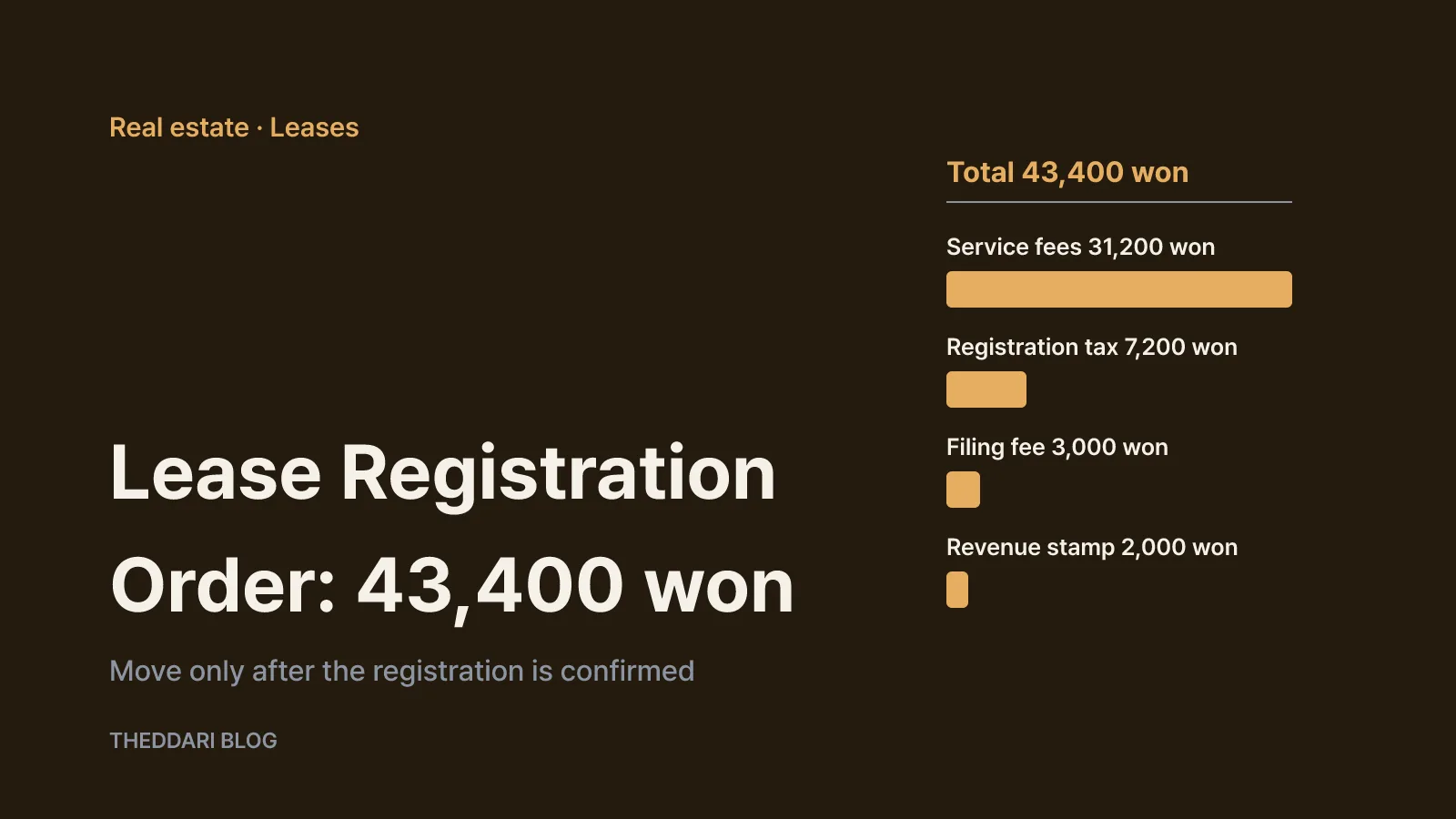
As of October 2026, if your housing lease in Korea has ended and the landlord has not returned your deposit, but you have to move out anyway, the standard protective step is to apply for a lease registration order (임차권등기명령, imchagwon deunggi myeongnyeong) at the court with jurisdiction over the rented home. Do not move until the lease registration actually appears in the property's register. For one landlord, one tenant and one property, Korea's official legal information service puts the total filing cost at 43,400 won (Easylaw), and you can claim that amount back from the landlord under Article 3-3(8) of the Housing Lease Protection Act.
This guide is written for tenants, including foreign residents, renting under a jeonse (lump-sum deposit) or monthly rent (wolse) contract. It walks through the legal basis, the paperwork, the fees, the timing of your move and what changes after registration.
Why tenants in Korea need this order
Under Korean housing law, a tenant who has taken possession of the home and registered their address there (the move-in report, 전입신고) gains what the law calls opposing power: the lease can be enforced even if the property is sold or auctioned. Adding a fixed-date stamp on the contract also gives preferential repayment rights, meaning a place in the queue if the property goes to auction. These protections depend on you continuing to live there with your resident registration at that address. If you move out and transfer your registration before getting your deposit back, you risk weakening the very protections that secure your money.
The lease registration order closes that gap. Article 3-3(5) states that once the lease registration is completed, the tenant acquires opposing power and preferential repayment rights; rights obtained earlier are kept as they were; and after registration the tenant does not lose them even if the usual requirements of possession and resident registration are no longer met. In practice, the court records your unpaid lease on the official property register so you can physically move on.
Article 3-3(1) sets two conditions:
- The lease has ended, whether by expiry or termination.
- The deposit has not been returned.
You file with the district court, branch court, or city/county court that covers the location of the rented home. That is the court for the property where your deposit is tied up, not the court near your new address. The tenant is the applicant, and under Article 3-3(9) a financial institution, such as a bank that funded a jeonse loan, may also apply on the tenant's behalf by subrogation.
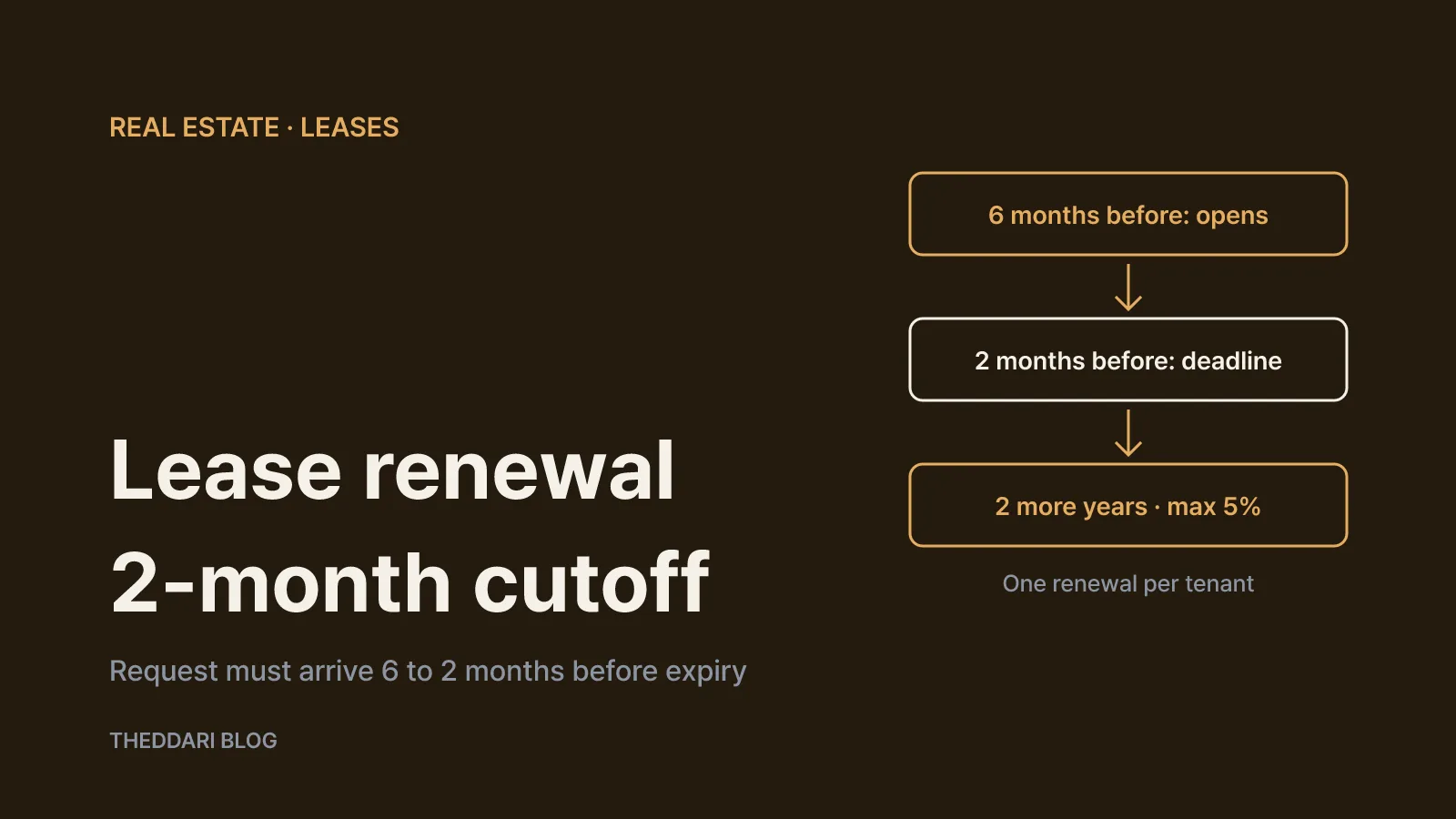
The point where many applications get stuck is proving that the lease is over. Article 3-3(2) requires you to substantiate the reason for the application and the facts behind it, so keep a record of how you told the landlord you were not renewing. Notice timing and automatic renewal are covered in our guide to Korea's lease renewal right.
Documents to prepare and the 43,400 won fee
The Incheon District Court's FAQ lists the attachments:
- Application form for a housing lease registration order, printed from the court's e-civil service website and filled in.
- Certified copy of the property register for the rented home.
- Resident registration certificate (등본 or 초본) showing the tenant's address history, issued within the past month.
- Copy of the lease contract, including the page with the fixed-date stamp.
- One piece of evidence that the lease was terminated: a certified-content letter, a transcript of a recording, printouts of text or KakaoTalk messages, a lease completion confirmation, a report of rights and demand for distribution, or a copy of a termination agreement. If you have none of these, you need a copy of a court decision allowing notice by public service.
- Receipts for the registration and license tax and the registration filing fee.
- Receipts for the electronic revenue stamp and the prepaid service fees.
If the landlord is a company, add its corporate register. If you rent only part of a multi-household building, attach a floor plan marking your unit, which Article 3-3(2)(2) also requires.
The fee breakdown from Easylaw's Q&A, dated September 15, 2026:
← Swipe to see more
| Item | Amount | Basis |
|---|---|---|
| Revenue stamp | 2,000 won | Per application |
| Registration filing fee | 3,000 won | Per property |
| Service fees | 31,200 won | 5,200 won × 3 rounds × 2 parties |
| Registration and license tax (incl. local education tax) | 7,200 won | Per property |
| Total | 43,400 won | 1 landlord, 1 tenant, 1 property |
Service fees scale with the number of parties. If a married couple co-owns the home, there are two landlords and three parties in total, so service fees become 5,200 × 3 × 3 = 46,800 won and the total becomes 59,000 won. Easylaw notes that service fees must be paid in cash, so check payment options before you go.
Under Article 3-3(8), you may claim the costs of the application and registration from the landlord. Keep every receipt and add them to your deposit demand.
When is it safe to move out?
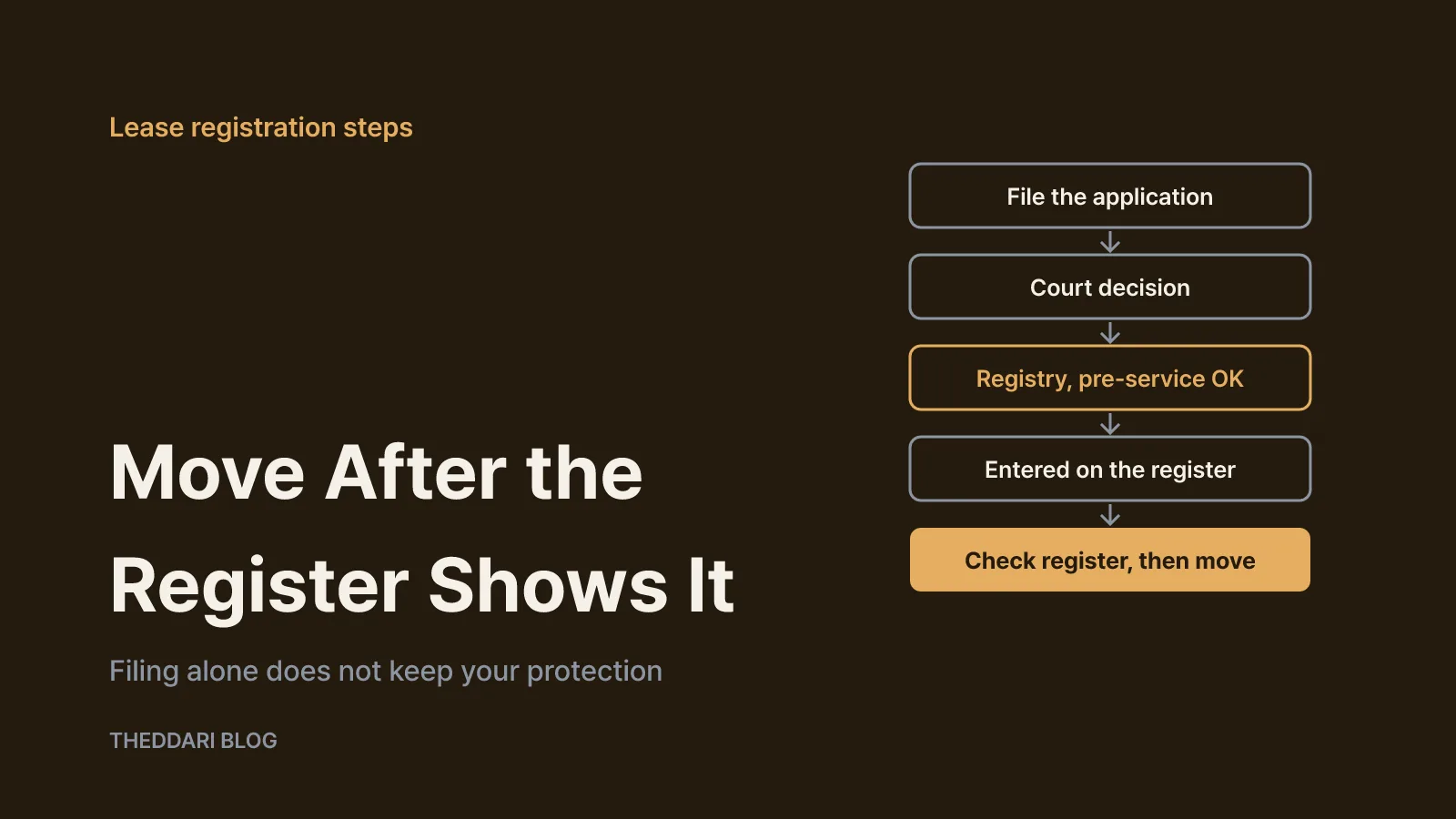
The most common mistake is moving out the day the application is filed. The protection in Article 3-3(5) applies once the lease registration is completed. Filing is not enough, and neither is the court's decision on its own; the registrar has to enter the lease on the property register. Before moving, request a fresh copy of the register and confirm that the housing lease registration is listed.
The process generally runs like this:
- File the application and receipts at the competent court.
- Court review and decision. If something is missing, the court may ask you to correct it.
- Commission to register. A court official instructs the registry to enter the lease.
- Entry on the register by the registrar.
- Check, then move. Confirm the entry on a new register copy, then move and transfer your resident registration.
Step 3 changed in 2023. Article 5 of the Supreme Court Rules on lease registration order procedures originally tied the registration request to the moment the decision was served on the landlord. An amendment dated July 14, 2023 (effective July 19, 2023) added that, for housing lease registration orders, the court may commission registration even before the decision is served on the landlord. A landlord who dodges mail or cannot be reached no longer has to stall your registration.
Note the wording: the court may do this. It is an option, not a guarantee in every case, and processing times vary by court and by whether corrections are needed. If your moving date is fixed, gather documents as soon as the lease end is certain and answer any correction request immediately. If the application is dismissed, Article 3-3(4) lets the tenant file an appeal.
What registration does and does not do
Once registered, you can move and change your resident registration without losing the protections you already held. If you had a move-in report and fixed-date stamp, those rights stay as they were; if you lacked them, registration itself gives you opposing power and preferential repayment rights under Article 3-3(5).
Article 3-3(6) adds a consequence for the next occupant: anyone who rents the home after the registration cannot claim the small-deposit priority repayment under Article 8. Prospective tenants may hesitate for that reason. Our small-deposit tenant guide explains that priority rule.
Landlords have remedies too. Article 3-3(3) applies Civil Execution Act provisions so that a landlord can object to the order or seek its cancellation, which is why solid proof that the lease ended matters.
Registration protects your claim; it does not collect the money. If the landlord still does not pay, you will need a separate legal route to recover the deposit. And until the registration shows up, keep living there and keep your resident registration at that address.
Final checklist before you file
- Lease ended: confirm expiry or termination and gather notice evidence.
- Right court: find the court covering the rented property's location.
- Documents: property register, resident registration issued within one month showing address history, and a contract copy with the fixed-date page.
- Fees: 2,000 won stamp, 3,000 won filing fee, 7,200 won tax and service fees of 5,200 won × 3 × number of parties.
- Extras: corporate register for a company landlord; floor plan for part of a building.
- Verify: pull a fresh register copy and confirm the lease registration.
- Move: only then move and transfer your registration.
- Reclaim: keep receipts and claim the costs from the landlord.
File early, and move only after the registration is confirmed.