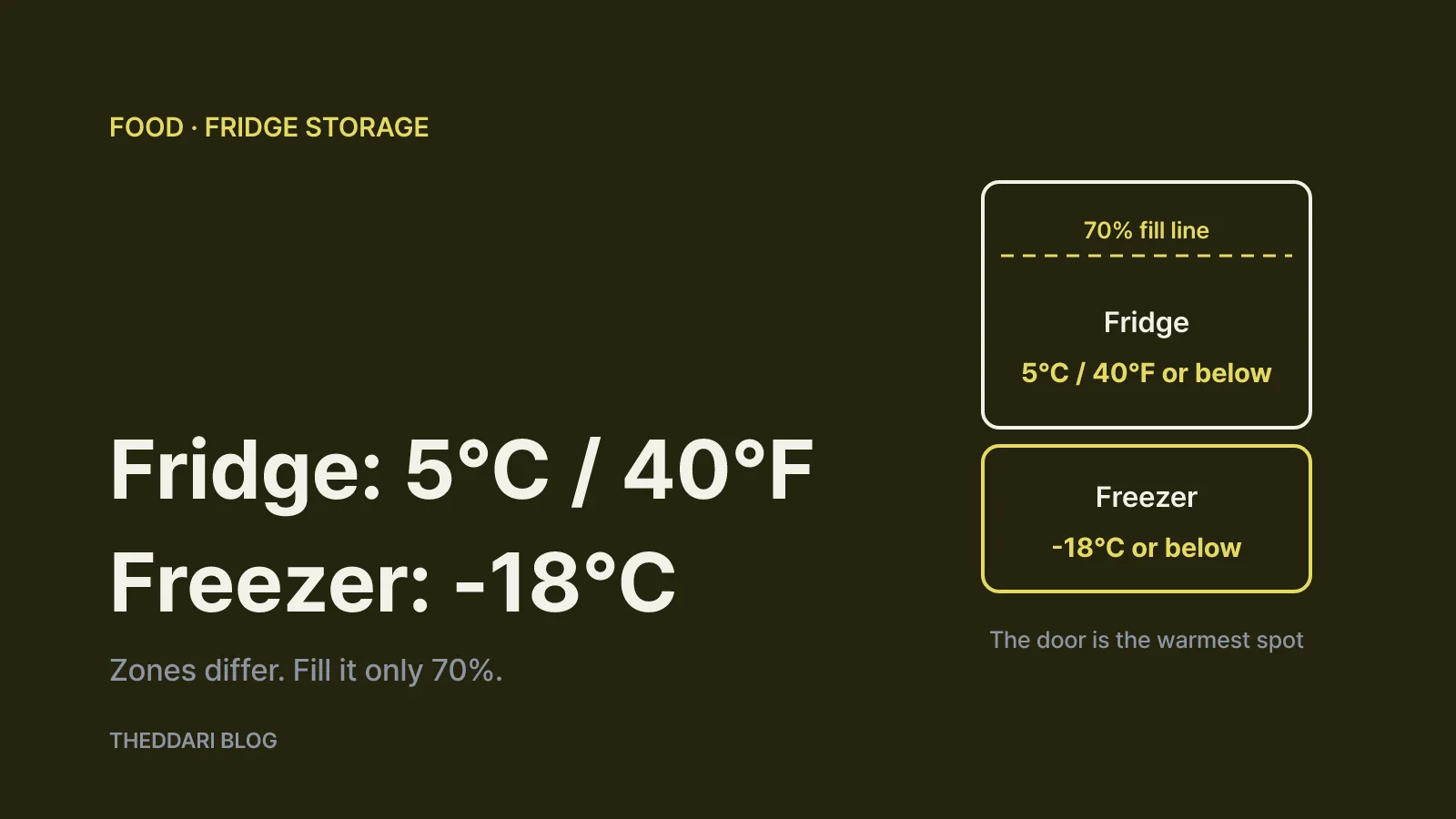
As of November 2026, the short answer is: keep your refrigerator at 40°F (about 4°C) or below, which is the USDA Food Safety and Inspection Service (FSIS) recommendation, and keep the freezer at -18°C (about 0°F) or below, the figure Korea's food safety ministry (MFDS) uses. Korea's guidance for the fridge itself is 5°C (41°F) or below, so the two standards differ by roughly one degree Celsius. Both agencies make the same point, though: the number on the dial matters less than the temperature your food actually sits at, and that varies from shelf to shelf.
40°F in the fridge, -18°C in the freezer: measure, don't guess
FSIS calls the range between 40°F and 140°F the "Danger Zone" and notes that some bacteria can double in number in as little as 20 minutes within it (USDA FSIS). A fridge set at 40°F or below protects most foods. In its August 2025 food poisoning advisory, Korea's MFDS repeated its own rule of 5°C or below for chilled food and -18°C or below for frozen food, and pointed out that foodborne bacteria multiply fastest between 32°C and 43°C (Food Today report). Refrigeration slows bacteria down; it does not kill them.
The dial on most fridges shows a setting such as 1 to 5, or "cold" and "colder", not a verified temperature. FSIS recommends an appliance thermometer, which is designed to stay accurate at cold temperatures, for any fridge without a built-in display. Put it on a middle shelf rather than the door, leave the door shut for a while, then read it. If the fridge is above 40°F or the freezer is warmer than -18°C, turn the setting one step colder and check again later.
The thermometer also answers the hardest question after a power cut. FSIS says that if the fridge is still at 40°F when the power comes back, the food is safe, while food held above 40°F for more than 2 hours should not be eaten. Without a thermometer you are left guessing.
The door is the warmest spot: how temperature changes by zone
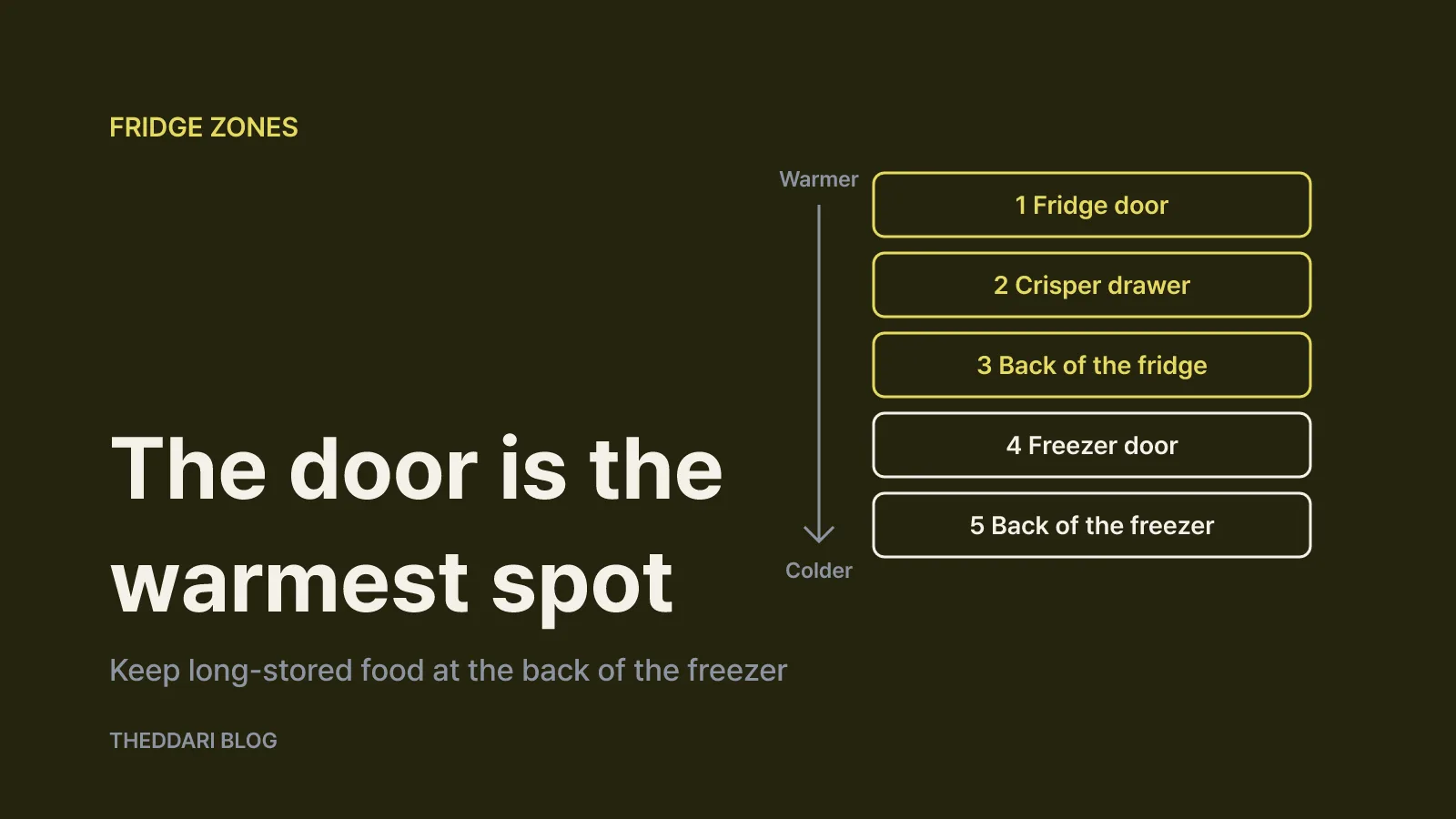
Korea's Food Safety Korea portal ranks the zones of a typical fridge-freezer from warmest to coldest: fridge door, crisper drawer, back of the fridge, freezer door, back of the freezer (Food Safety Korea). The door warms up every time you open it, so MFDS advises keeping only food you will eat soon in the door, and sealing anything meant for long storage and pushing it to the back of the freezer.
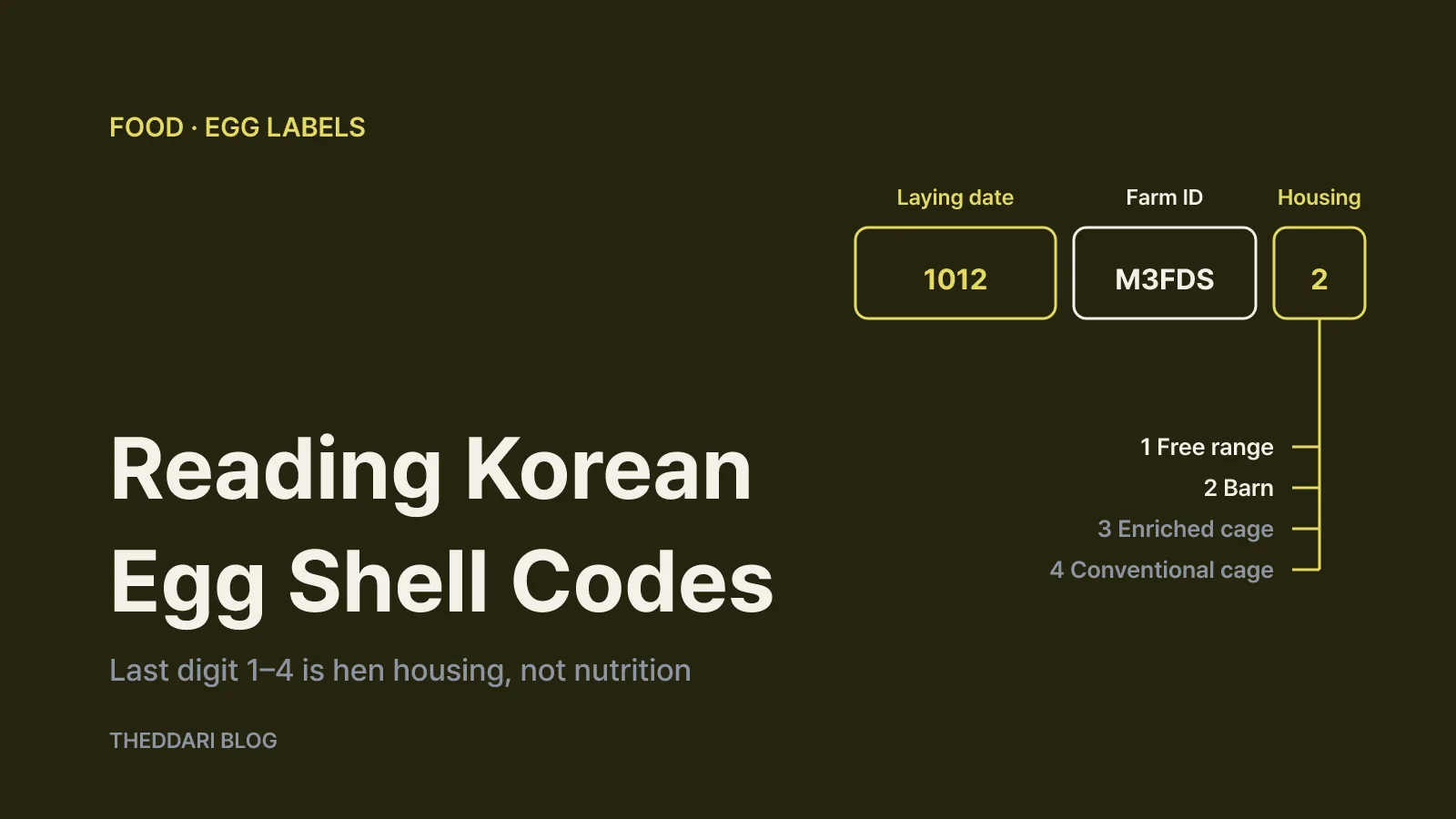
FSIS gives the same advice in different words: don't store perishable foods in the door, and keep eggs in their carton on a shelf, because door bins fluctuate more than the main cabinet. A Korean government safety video from the Ministry of the Interior and Safety offers a simple layout (SafeTV):
- Top of the freezer: frozen ready meals
- Bottom of the freezer: meat and seafood for frozen storage
- Back of the fridge: eggs, and meat or seafood you will cook soon
- Bottom of the fridge: vegetables and fruit
Crisper drawers are about humidity. FSIS explains that vegetables prefer higher humidity and fruit prefers lower humidity, and some drawers have a slider so you can set each one. If yours do, give fruit and vegetables separate drawers. Food Safety Korea also advises against wrapping vegetables in newspaper, since ink and debris can transfer to the food; brush off soil and use wrap or a container instead.
Leave room for air and cool hot food fast
MFDS recommends filling the fridge to no more than 70% of its capacity, and the SafeTV video says under 70%. Food Safety Korea gives the reason: an overpacked fridge cannot circulate cold air properly. A large container parked in front of the air vent can leave everything behind it warmer than the rest of the shelf. On grocery day, clear out old leftovers before loading new food.
Opening the door less often also helps. Both Food Safety Korea and FSIS say to open the doors only as needed and close them quickly.
Hot food is where the two countries' wording differs. Food Safety Korea says to cool hot food quickly before storing it, because a large hot batch raises the temperature inside and affects nearby food. FSIS says hot food can go straight into the fridge or be chilled quickly in an ice or cold-water bath first. The shared goal is to get food cold fast rather than leaving it on the counter. FSIS's practical fix works for both: divide a big pot of soup or stew into small, shallow containers, and cut large roasts or whole poultry into smaller pieces before refrigerating.
Where raw meat, seafood and eggs belong
The priority for raw animal foods is preventing drips. FSIS says raw meat, poultry and seafood should be in sealed containers or wrapped securely so their juices cannot reach other foods. MFDS goes further: put meat in an airtight container on the lowest shelf, and if blood leaks inside the fridge, wipe it with a chlorine-based disinfectant.
If your crisper drawers sit at the very bottom, apply the underlying rule: raw items go below anything you will eat without cooking. Use a dedicated meat drawer if you have one; FSIS notes that adjustable meat and cheese drawers receive extra cold air to keep items very cold without freezing them.
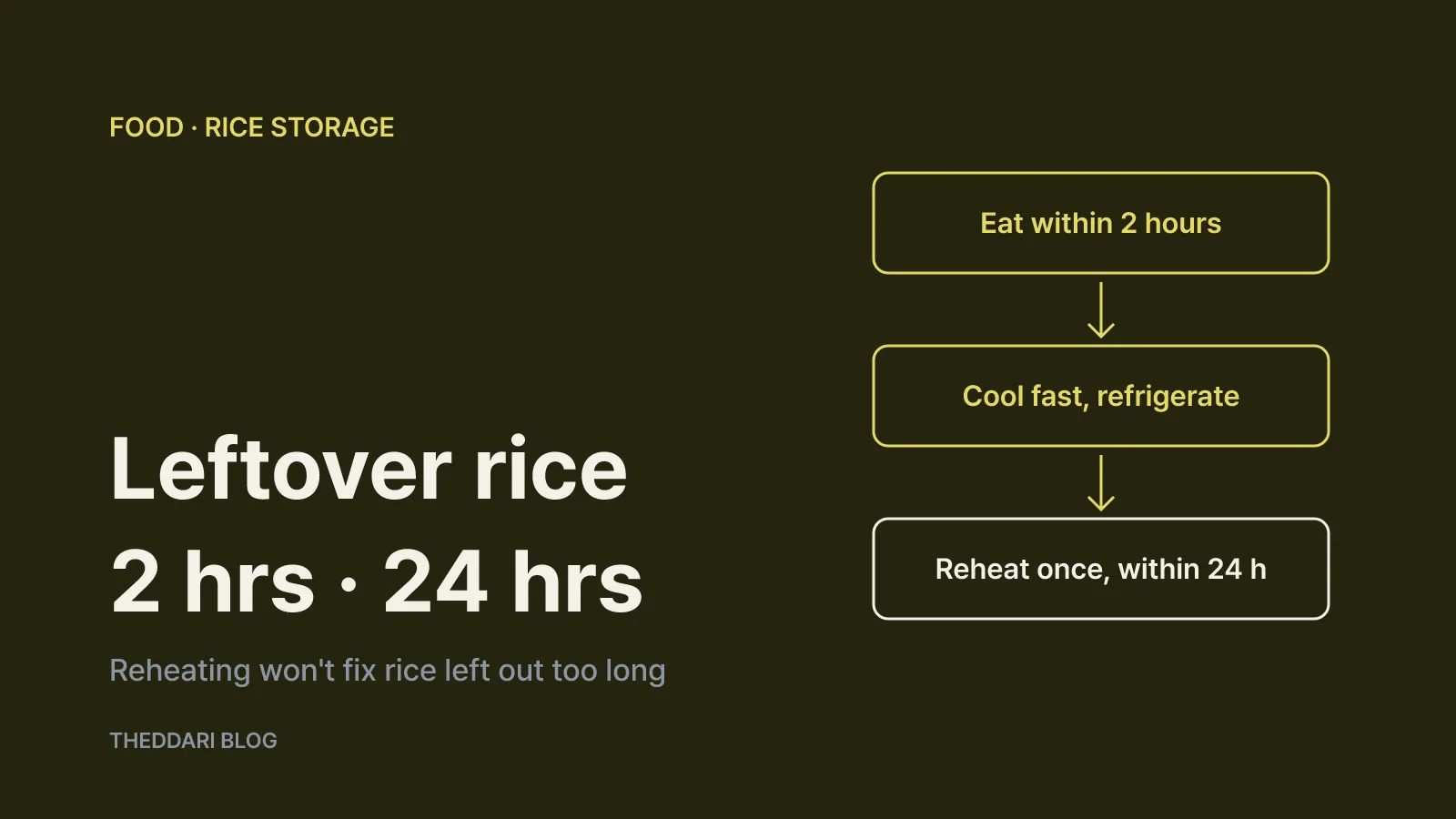
FSIS also publishes rough limits for home refrigerator storage: ground meat and raw poultry 1–2 days, steaks and chops 3–5 days, fresh fish and shellfish 1–2 days, cooked leftovers, soups and stews 3–4 days, and fresh eggs in the shell 3–5 weeks. Follow the date and storage instructions on a product's label first; Food Safety Korea also tells shoppers to check the label's storage method before putting food away. The FSIS chart is most useful for homemade dishes and unlabeled cuts.
Germs still grow in the cold: cleaning and freezer time
MFDS warns that some microbes survive and grow at low temperatures. FSIS names the main example: Listeria monocytogenes thrives in the cold and, if present, can multiply in the fridge over time. That is why a fridge needs regular cleaning, not just the right setting.
The SafeTV guidance is to clean the fridge at least once a week with a fridge-safe sanitizer and let it dry. FSIS adds three habits: wipe spills immediately, throw out perishables that should no longer be eaten once a week, and vacuum or brush the condenser coil several times a year so the unit keeps cooling efficiently. Seal opened packages so air cannot reach the food.
Freezing is not indefinite either. Food Safety Korea suggests limiting frozen storage to 1 to 3 weeks. FSIS frames the difference as quality versus safety: food kept too long in the fridge or freezer may lose quality but usually won't make you sick, whereas food left too long on the counter can be dangerous even if it looks fine. Label frozen food with the date so you use the oldest first.
A five-minute fridge check
- Put an appliance thermometer on a middle shelf and confirm 40°F (about 4°C) or below in the fridge and -18°C (about 0°F) or below in the freezer.
- Check that the fridge is no more than about 70% full and that nothing blocks the air vents.
- Move milk, eggs and other perishables out of the door bins onto inside shelves.
- Put raw meat and seafood in sealed containers below ready-to-eat food.
- Date your leftovers, and freeze or discard anything you won't eat this week.
Repeat the check whenever the season changes or you stock up for a holiday, because a full fridge is exactly when temperatures start to drift.