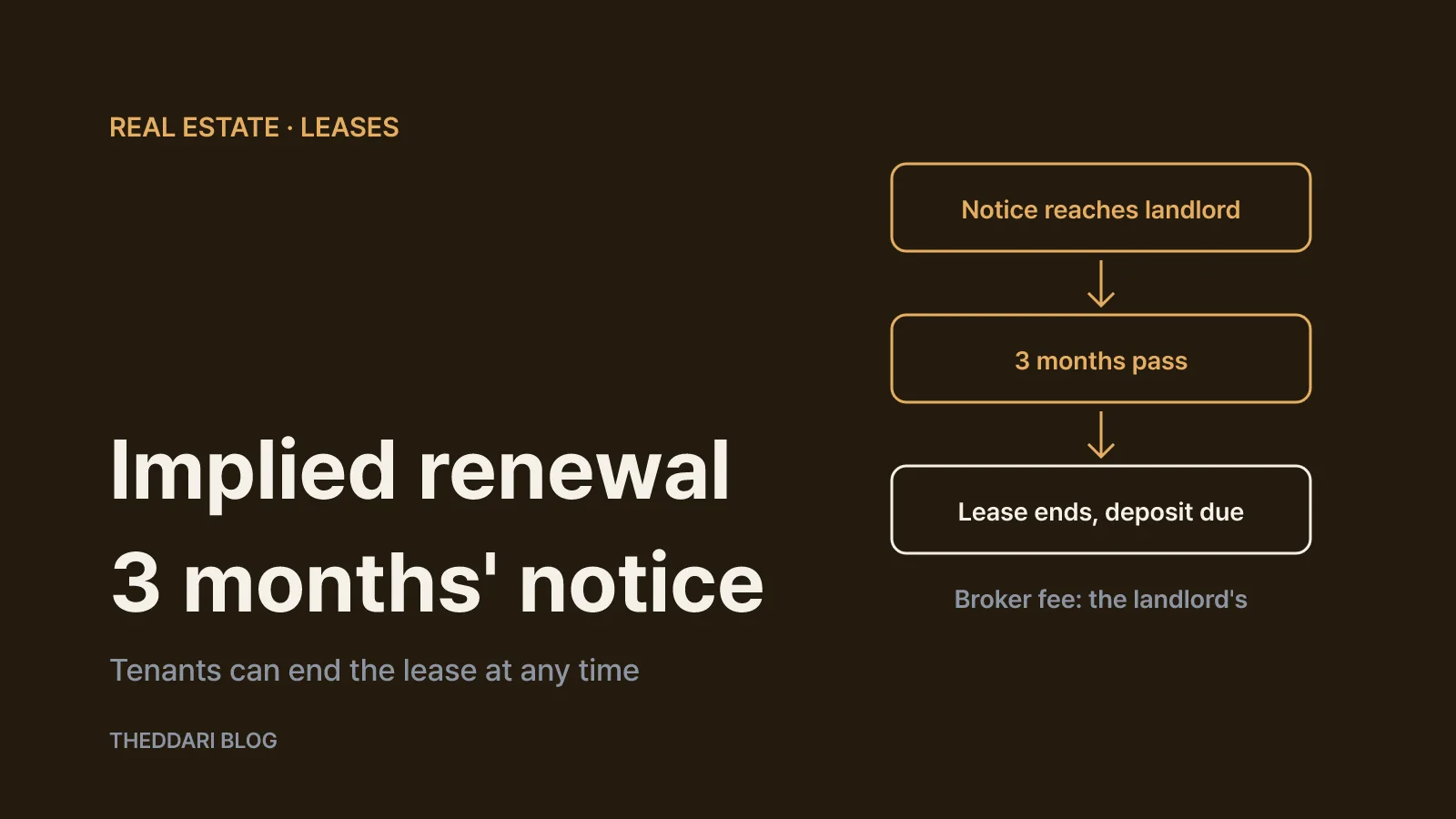
As of November 2026, a tenant in South Korea whose housing lease has been implicitly renewed can give notice to terminate at any time, and the lease ends three months after the landlord receives that notice. In principle, the tenant does not have to pay the broker fee for finding the next tenant. The rule comes from Article 6-2 of the Housing Lease Protection Act, and the version currently in force took effect on January 2, 2026 (Act No. 21065).
This matters to anyone renting in Korea, including foreign residents on jeonse (lump-sum deposit) or wolse (monthly rent) contracts. Landlords and agents sometimes tell departing tenants that leaving early means covering the next tenant's commission or paying rent until someone moves in. Whether that is true depends on one question: is your lease still in its original term, or has it already been renewed?
Check whether your lease was implicitly renewed
Korea's housing guarantee agency, HUG, explains on its jeonse fraud prevention page that an implied renewal happens under Article 6 of the Act when neither side signals an intention to end the contract during the window between six months and two months before expiry. In practice, three conditions apply:
- The landlord did not, between six and two months before the end date, refuse renewal or say the lease would not continue unless the terms changed.
- The tenant did not, by two months before the end date, say they would not renew.
- The tenant was not behind on rent by an amount equal to two payment periods and had not seriously breached their obligations.
When these conditions are met, the lease is treated as renewed on the same terms, and the renewed term is two years. HUG notes that a two-year lease can therefore become four years in total. Many people remember a one-month deadline for tenants from older rules, but as a LawTalk legal guide points out, the current text uses two months before expiry for both parties.
If you signed a new contract with a different deposit or rent at the end of the term, that may be a fresh agreement rather than an implied renewal. If the landlord simply said "keep living here" and nothing new was signed, an implied renewal is much more likely. Gather the original contract and any texts or KakaoTalk messages from around the expiry date before you act.
Notice can be given anytime; it takes effect three months after receipt
Article 6-2(1) lets the tenant notify the landlord of termination at any time after an implied renewal. It does not matter whether three months or eighteen months of the renewed term have passed. This right belongs only to the tenant; the landlord cannot end an implicitly renewed lease early on that basis.
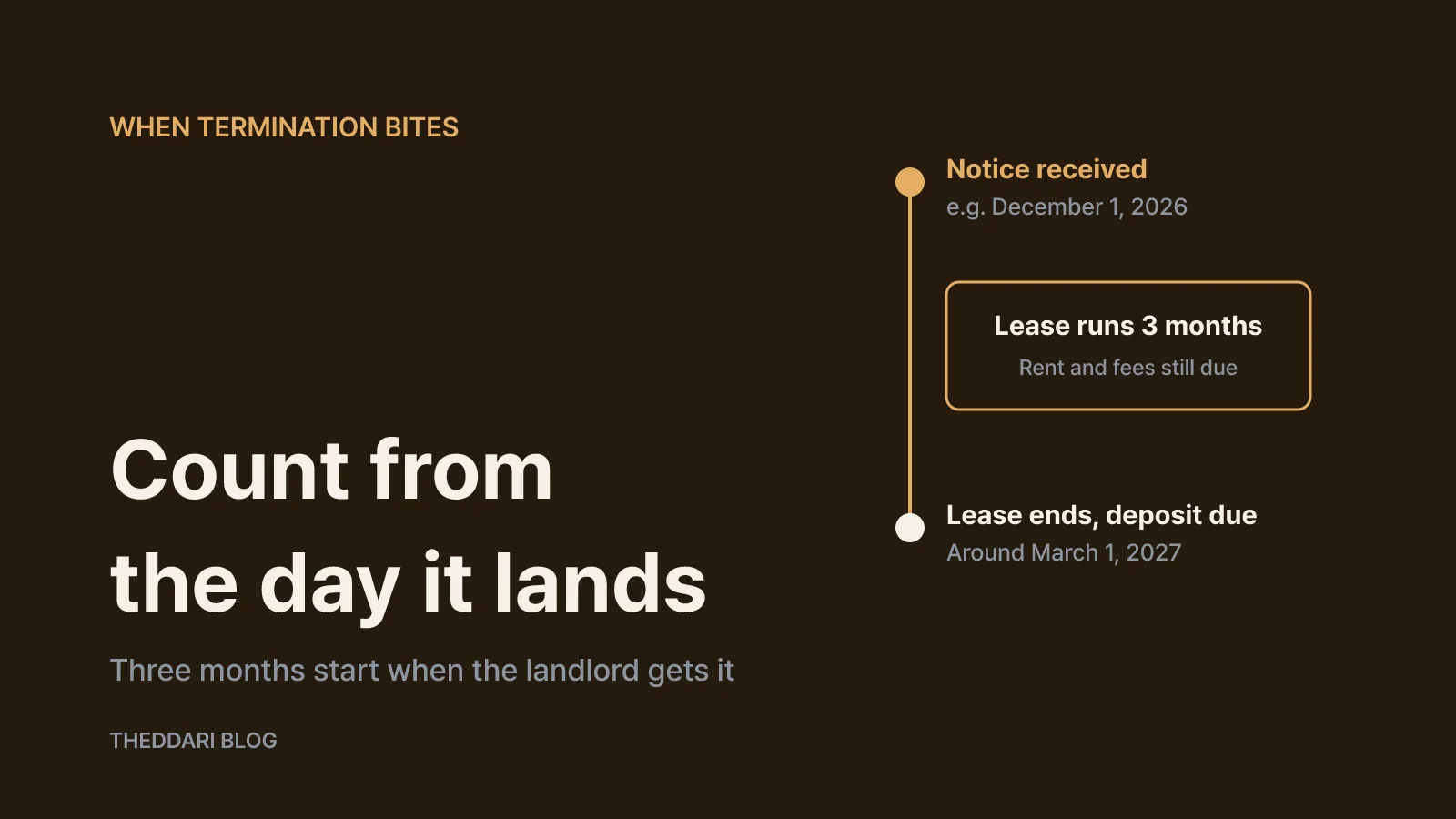
Article 6-2(2) sets the timing: termination takes effect once three months have passed from the day the landlord received the notice. The trigger is receipt, not the date you sent it. For example, if your notice reaches the landlord on December 1, 2026, the lease ends around March 1, 2027.
The contract stays alive during those three months. On a monthly-rent lease you normally keep paying rent and maintenance fees until the end date, even if you move out sooner. In return, the landlord must return the deposit when the lease ends. Not having found a new tenant is not a legal reason to hold the deposit back. If you have a closing date on a new home, work backwards so your notice arrives at least three months before you need the deposit.
The same applies after using the renewal request right
Some tenants extended their lease by formally exercising the statutory renewal request right under Article 6-3 rather than through silence. Article 6-3 applies Article 6-2 to leases renewed this way, so the same three-month notice rule covers them. According to the LawTalk guide, the Supreme Court confirmed this in case 2023Da258672 (decided January 11, 2024), holding that the rule applies even when the termination notice reached the landlord before the renewed term began.
Who pays the broker fee for the next tenant
Under the Licensed Real Estate Agents Act, brokers charge the parties who commission the deal. The new lease is between the landlord and the incoming tenant, so the departing tenant is not a party to it. That is why, when a tenant uses the statutory termination right after an implied renewal, the fee for finding the next tenant is in principle the landlord's cost.
Many Korean lease contracts include a special clause along the lines of "if the tenant leaves before expiry for personal reasons, the tenant pays the next tenant's broker fee." Recent lower-court decisions summarized in another LawTalk guide refused to apply such clauses to terminations after implied renewal:
- Suwon District Court, 2024Gadan565083 (January 8, 2025): making the tenant pay the fee restricted the Article 6-2 right and was void under Article 10, which invalidates terms that disadvantage tenants against the Act. The landlord could not deduct it from the deposit.
- Seoul Western District Court, 2023Gadan202573 (October 10, 2024): a clause making the tenant cover rent, maintenance fees and the broker fee until the next tenant moved in could not be applied to a lawful termination.
- Seoul Central District Court, 2023Gahap64568 (July 18, 2024): termination after implied renewal differs from an ordinary early move-out, so the landlord's claim for the fee failed.
Lower-court rulings depend on their facts, so they do not settle every dispute. The consistent thread is whether the clause was written for a one-sided exit during the original term or would effectively block a right the Act guarantees.
Leaving during the original term is different
If the original contract period has not ended, the tenant has no statutory right to terminate at will. Unless the contract includes an early-termination clause, the landlord does not have to return the deposit before expiry, and leaving early requires the landlord's agreement. In that situation, tenants often agree to pay the next tenant's broker fee as the price of an early exit. That is a negotiated condition, not something the law imposes.
A practical sequence from notice to deposit refund
- Confirm the lease status: note the contract end date, any messages exchanged before the two-month mark, and whether a new contract was signed.
- Send notice with proof of receipt: because receipt starts the clock, certified content mail (naeyong jeungmyeong) is the safest option. Include the address, the fact of implied renewal, your intention to terminate, the expected end date and your refund account.
- During the three months: cooperate with viewings and keep paying rent and fees until the end date.
- On the end date: settle restoration items. If the landlord tries to deduct a broker fee, object in writing and cite Article 6-2 and Article 10.
- If the deposit is not returned: apply for a lease registration order before you move your residence registration, so you keep your opposability and priority repayment rights while pursuing the refund.